Skip to content
Introduction
Imagine a world where every woman feels fully informed and confident in her contraceptive decisions—where guidance isn’t vague, but grounded in trusted medical knowledge. That’s exactly the kind of clarity you’ll find when diving into Birth Control Options Explained by a Women’s Health Provider. This article aims to empower readers with detailed insights, real-world context, and actionable recommendations, setting the stage for an informed journey through contraception choices.
The Importance of Expert Guidance
Contraception isn’t one-size-fits-all. A provider-led explanation ensures each option—from pills and implants to sterilization and IUDs—is presented with nuance. Healthcare providers draw on clinical evidence, patient history, and lifestyle factors, offering personalized guidance. For instance, a woman seeking long-term birth control who doesn’t want to think about it daily may benefit from a long-acting reversible contraceptive (LARC), such as an IUD or implant. These methods boast less than 1% failure rates annually, compared to 9% for pills and 18% for condoms, according to U.S. data CDC.
Why This Approach Matters
Too often, contraception counseling leans heavily on familiarity—patients are steered toward the pill simply because it’s the default, not necessarily the best fit. Integrating expert perspective means considering factors like age, reproductive goals, side effect tolerance, and ease of access. For example, data from 2022–2023 show that among women ages 15–49 in the U.S., 54.3% were using contraception, with oral pills at 11.4%, LARCs at 10.5%, and sterilization at 11.5%—indicating diverse preferences and needs CDC.
What You’ll Gain in This Series
In upcoming sections, this Birth Control Options Explained by a Women’s Health Provider series will guide you through each method—how it works, who it suits best, what risks and benefits to weigh, and even real patient scenarios. You’ll gain clarity on choosing between effectiveness versus convenience, hormonal versus non-hormonal approaches, and temporary versus permanent solutions. By grounding information in evidence and expert insight, the article will help you think critically and confidently about your reproductive health journey.
Now, let’s proceed from this foundation with an informed exploration of contraception—starting with the most common methods and how they actually match diverse women’s lives.
Exploring Common Birth Control Methods
Understanding the most prevalent birth control methods can empower women to make informed choices about their reproductive health. Let’s explore a few common options and consider how they integrate into real-world scenarios.
Hormonal Methods
Hormonal birth control methods, such as the pill, patch, and ring, are widely used due to their efficacy and convenience. These options work by regulating hormones to prevent ovulation. For instance, many women opt for the oral contraceptive pill because it offers flexibility and ease of use. According to the Planned Parenthood, the pill is 91% effective with typical use but requires daily discipline. It’s ideal for women who prefer a non-invasive, reversible method, and it often provides additional benefits like menstrual regulation and acne reduction.
Barrier Methods
Barrier methods, including condoms and diaphragms, offer non-hormonal protection by physically preventing sperm from reaching the egg. They are especially beneficial for women who prefer avoiding hormonal interventions. Condoms, for example, are unique in providing dual protection against pregnancy and sexually transmitted infections (STIs). The Centers for Disease Control and Prevention highlights their effectiveness in STI prevention, making them a crucial option for sexually active singles and couples alike. However, correct and consistent use is essential for maximizing their 85% efficacy rate under typical conditions.
Long-Acting Reversible Contraceptives (LARCs)
For women seeking prolonged protection without daily attention, long-acting reversible contraceptives (LARCs) like intrauterine devices (IUDs) and implants are exceptional choices. These methods boast over 99% effectiveness, as reported by The American College of Obstetricians and Gynecologists, and can remain in place for several years. Their appeal lies in “set-and-forget” convenience, reducing the likelihood of user error. This makes them highly suitable for women with busy lifestyles or those who prefer minimal intervention in their daily routine.
Each method’s suitability varies depending on individual circumstances and health needs. In consultation with a healthcare provider, women can explore these options further, ensuring that the chosen method aligns with their lifestyle and reproductive goals. By understanding these options through the lens of “Birth Control Options Explained by a Women’s Health Provider,” women can confidently navigate their reproductive health journey.
Hormonal Methods of Birth Control
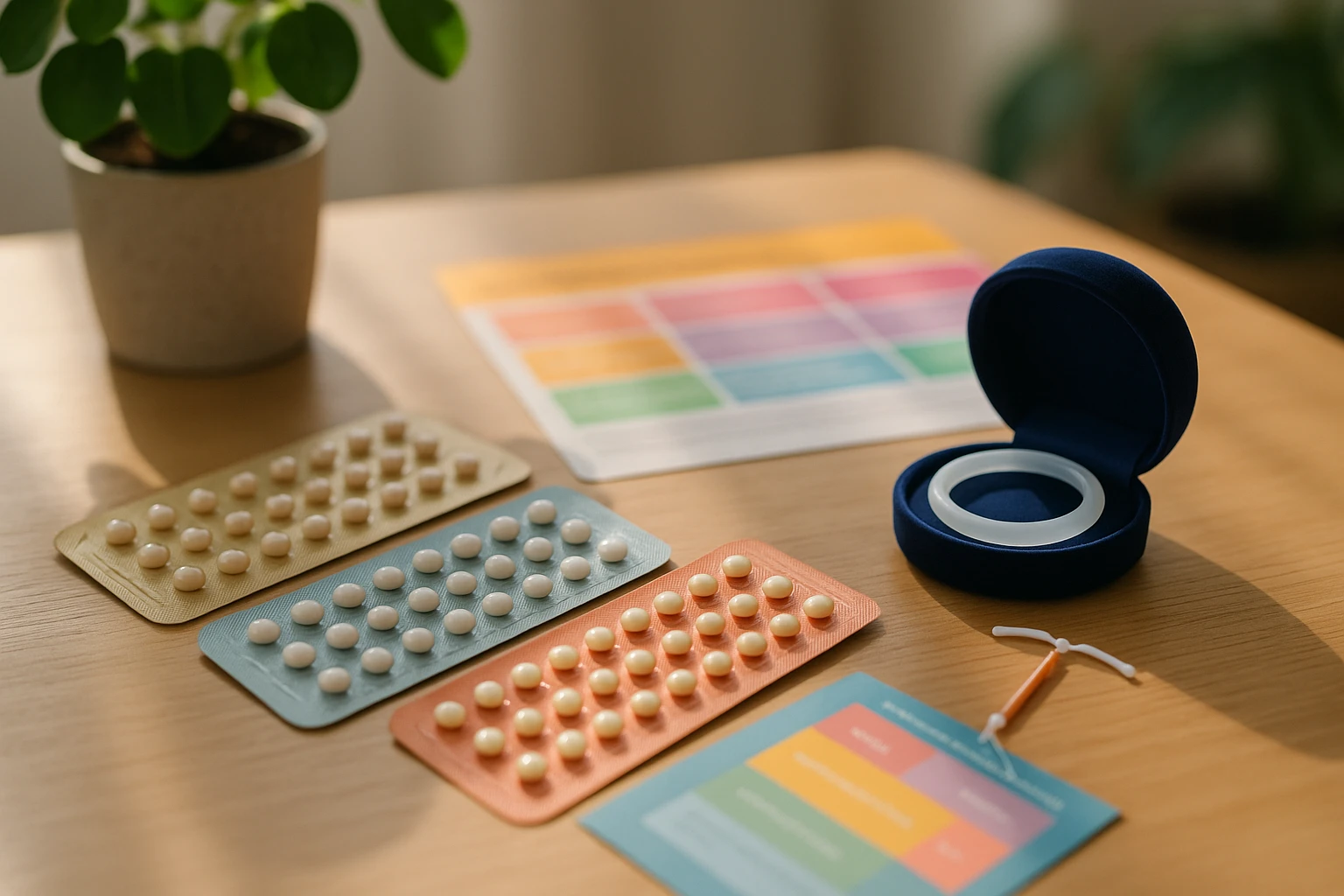
Hormonal birth control methods are popular choices for many women due to their effectiveness and ease of use. These methods utilize hormones to prevent ovulation and typically involve a regimen of estrogen and progestin hormones, or progestin alone. One of the most widely known options is the birth control pill. According to the Centers for Disease Control and Prevention, while birth control pills are effective when used correctly, their typical use failure rate is about 7% due to missed doses or incorrect usage. Read more at CDC.
Another hormonal option is the contraceptive patch, which releases hormones through the skin. It is applied weekly and is noted for its convenience, especially for women who may have difficulty remembering daily pills. Additionally, the vaginal ring, inserted monthly, is another method that some women find preferable due to its reduced frequency of application. According to research published in the National Center for Biotechnology Information, these methods, when used consistently, offer a high degree of pregnancy prevention, but accessibility and user preference play significant roles in their success.
Injectable and Implantable Options
For those seeking longer-term solutions, injectable and implantable hormonal birth control methods are effective alternatives. The Depo-Provera shot, administered once every three months, contains progestin and is over 94% effective with typical use. The primary consideration with this method is the potential for side effects, such as weight gain and changes in menstrual cycles. In contrast, the hormonal implant, a small rod placed under the skin of the arm, provides up to three years of birth control. The convenience and effectiveness of implants make them an appealing choice for many women who want long-term contraception without daily or monthly maintenance.
When discussing these options, healthcare providers emphasize the importance of understanding the side effects and weighing them against one’s lifestyle and health needs. The decision between injectable and implantable methods often comes down to personal preference and healthcare provider recommendations, ensuring that the choice aligns with each individual’s health profile and lifestyle.
In summary, hormonal methods offer various options for women, each with unique benefits and considerations. As a women’s health provider explains, the journey to selecting the right birth control requires a comprehensive understanding of how each option fits into a woman’s personal and health circumstances, ensuring the best possible outcomes for family planning and reproductive health.
Long‑Acting Reversible Contraceptives (LARC): Inserting Peace of Mind
Building naturally on the discussion of method effectiveness, a women’s health provider often highlights that long‑acting reversible contraceptives—including IUDs and implants—offer outstanding reliability and minimal user maintenance. For example, hormonal IUDs like Mirena boast failure rates as low as 0.1–0.2% in the first year, with five‑year cumulative failure under 1%, rivalling surgical sterilization while remaining fully reversible Wikipedia–Hormonal IUD. Copper IUDs also perform impressively, with roughly a 0.8% failure rate in the first year and about 2.2% over 12 years for the Paragard model Wikipedia–Copper IUD.
Why LARC Stands Out
Once placed, LARC methods demand little attention—eliminating concerns about missed doses or application timing. Providers frequently point out that “get it and forget it” devices like IUDs significantly reduce typical‑use failure caused by human error, unlike daily or weekly methods such as pills or patches. The U.S. Department of Health & Human Services reports that implants result in only a 0.05% annual unintended pregnancy rate, and LNG IUDs about 0.2%, compared to roughly 9% for combined hormonal methods like pills, patches, or rings with typical use HHS‑OPA chart.
Real‑World Impact: Case Example
Consider a scenario of a 28‑year‑old patient shifting from daily pill use to a hormonal IUD. Previously she reported missed pills during busy weeks, resulting in irregular spotting and anxiety about contraceptive failure. After the IUD insertion—performed in a brief in‑office procedure—her menstrual bleeding became lighter and more predictable, and she no longer worries about remembering a regimen or dealing with monthly refills. This mirrors findings that women choosing IUDs or implants are far more likely to correctly understand their method’s effectiveness—around 72% accuracy—compared to just 12% for pill, patch, or ring users PMC study on contraceptive knowledge.
Addressing Barriers and Misconceptions
Even with high effectiveness, LARC methods are underused—particularly in the U.S.—due to misconceptions and inadequate education. Only about 2% of women in the United States use IUDs, often citing fear of insertion or doubts about device safety Wikipedia–Women’s reproductive health in the U.S.. A provider offering clear, empathetic counseling can help demystify the process, explaining risks, expected sensations, and providing reassurance about removal and reversibility.
On the continuum of Birth Control Options Explained by a Women’s Health Provider, this emphasis on LARC underscores the importance of not only effectiveness but also empowering patients through understanding and confidence in their method.

Conclusion: Empowering Choices for Every Woman
Understanding the variety of birth control options available today allows women to make informed decisions that best suit their individual needs and lifestyles. By consulting with a women’s health provider, you can explore options ranging from hormonal to non-hormonal methods, ensuring that you choose the most effective and convenient method for you.
It’s essential to consider your lifestyle, health conditions, and personal preferences when deciding. For instance, a younger woman juggling a busy career may prefer the convenience of an IUD, while someone who is sensitive to hormones might opt for a barrier method. Each option brings distinct advantages and potential side effects, which should be discussed with a healthcare professional. According to Planned Parenthood, consulting a provider ensures you receive personalized advice tailored to your health profile.
As highlighted in the CDC’s guidelines, regular check-ins with a healthcare provider can help in adjusting birth control methods as your needs and circumstances change. This proactive approach is crucial in maintaining reproductive health and avoiding unintended pregnancies, emphasizing the importance of staying informed and vigilant about your options.
To take the next step, schedule an appointment with your healthcare provider to discuss the birth control options that have been explained. By doing so, you empower yourself with knowledge and a plan that aligns with your health goals. Remember, every woman’s journey to finding the right contraceptive method is unique, so take the time to learn and choose wisely.
Finally, spread awareness by sharing this information with friends and family. An educated community fosters better health outcomes for everyone. Whether you are just beginning to explore your options or are considering a switch, the right information and guidance from a women’s health provider can make all the difference in achieving a happier, healthier life.
Article Generated by Soogle

CRNP, FNP-BC, MSN is a board-certified Family Nurse Practitioner with 16+ years of experience. She provides personalized, high-quality care in family medicine, preventive health, and chronic disease management at MedHaven Health in Glen Burnie, Maryland. Read More